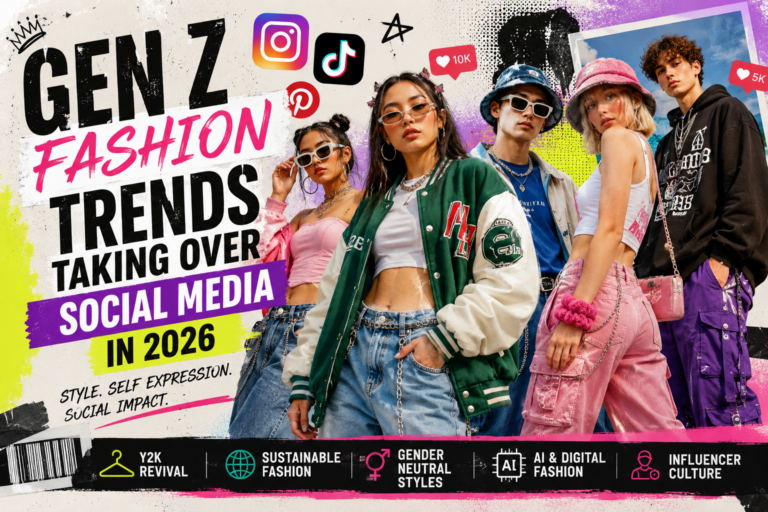

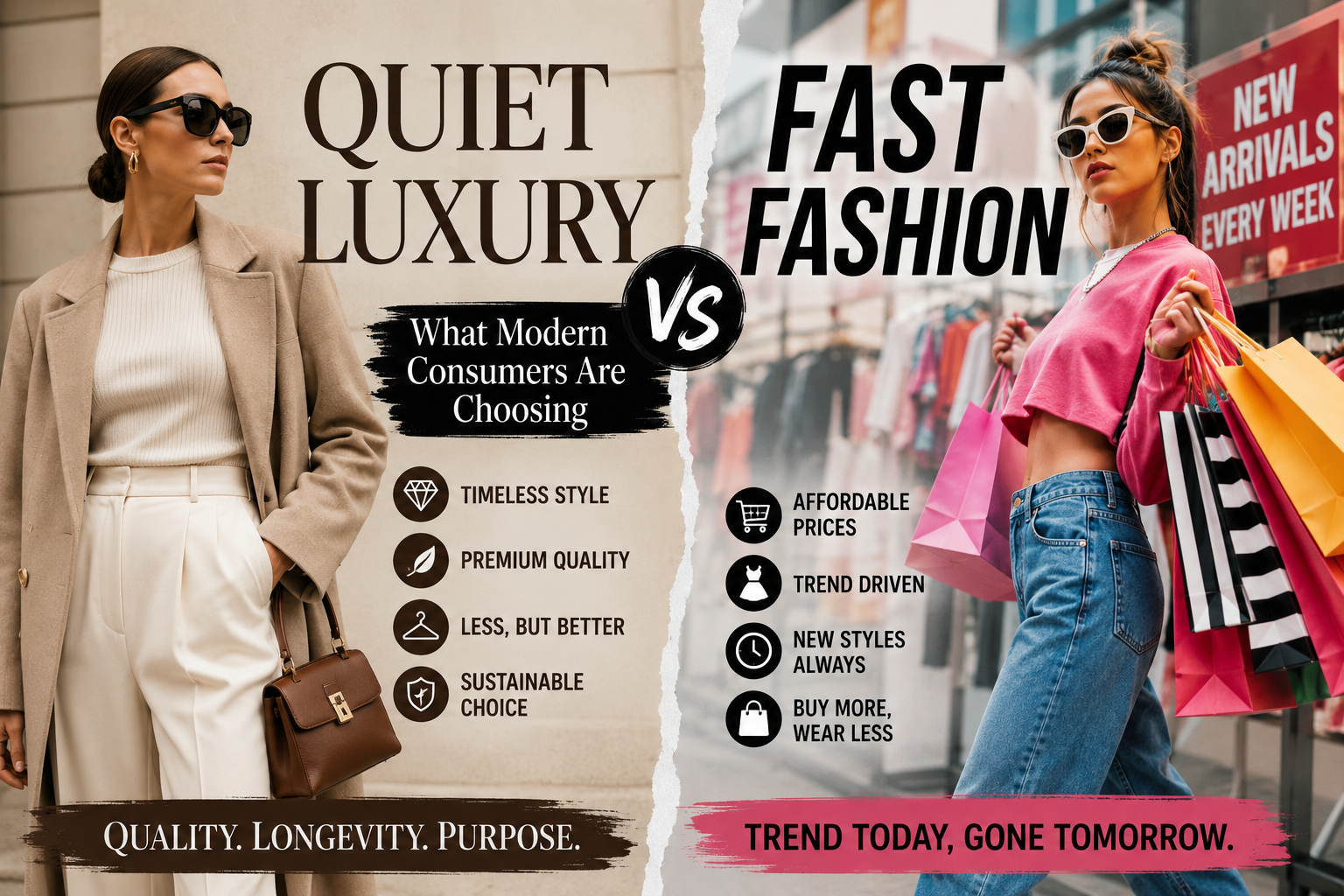
Fashion is no longer just about trends – it has become a reflection of identity, values, lifestyle, and social awareness. In 2026, two powerful fashion movements are dominating global conversations: Quiet Luxury and Fast Fashion.
One represents minimalism, timeless elegance, and exclusivity. The other thrives on affordability, rapid trend cycles, and mass-market accessibility.
As social media continues shaping consumer behavior, modern shoppers are increasingly caught between style, sustainability, status, and affordability.
What Is Quiet Luxury?
Quiet Luxury refers to understated, premium fashion that focuses on quality over flashy branding.
Unlike logo-heavy fashion trends of the past, quiet luxury emphasizes:
- Minimalist aesthetics
- Neutral color palettes
- Tailored fits
- High-quality fabrics
- Timeless design
- Subtle sophistication
The trend gained momentum through celebrities, influencers, and popular culture promoting “old money” fashion aesthetics and refined elegance.
Consumers embracing quiet luxury are often drawn to:
- Longevity over trend cycles
- Investment pieces
- Sustainable consumption
- Sophisticated personal branding
Rather than loudly displaying wealth, quiet luxury focuses on discreet elegance and exclusivity.
The Fast Fashion Industry Still Dominates
Despite growing awareness around sustainability, fast fashion remains one of the most powerful forces in the global fashion industry.
Brands continue producing inexpensive, trend-driven clothing at extremely high speed to meet constantly changing consumer demand.
Fast fashion appeals strongly because of:
- Affordable pricing
- Constant new arrivals
- Social media influence
- Celebrity-inspired trends
- Easy accessibility
Platforms like TikTok and Instagram have accelerated trend cycles dramatically, encouraging impulse purchases and rapid wardrobe changes.
For younger consumers, fashion often moves as quickly as viral content itself.
Social Media Is Driving Both Movements
Interestingly, both quiet luxury and fast fashion are thriving because of social media — but for very different reasons.
Quiet luxury dominates:
- Minimal aesthetic feeds
- Lifestyle influencer content
- Luxury fashion storytelling
- High-end capsule wardrobe culture
Meanwhile, fast fashion dominates:
- Viral trend videos
- Haul culture
- Influencer affiliate marketing
- Micro-trend experimentation
Algorithms constantly push new aesthetics, making consumers shift between aspirational luxury and affordable trend culture.
Sustainability Is Changing Consumer Thinking
One of the biggest criticisms of fast fashion is its environmental impact.
The industry is often linked to:
- Textile waste
- Water pollution
- Overproduction
- Poor labor conditions
- Unsustainable consumption
As climate awareness grows, many consumers are beginning to question whether constantly buying low-cost trend pieces is ethical or sustainable.
This has increased interest in:
- Slow fashion
- Thrift shopping
- Vintage fashion
- Sustainable brands
- Capsule wardrobes
Quiet luxury often aligns more naturally with sustainability because it promotes durability and long-term use rather than disposable fashion.
Gen Z Consumers Are Contradicting Themselves
Interestingly, Gen Z is simultaneously driving both sustainability conversations and fast fashion trends.
Many young consumers support ethical fashion online while still participating in:
- Trend-driven shopping
- Influencer-inspired purchasing
- Viral fashion hauls
- Ultra-fast online retail
Experts say this contradiction reflects the economic reality many young people face:
- Luxury fashion is expensive
- Sustainable brands often cost more
- Social media creates constant pressure to stay visually updated
As a result, affordability often wins over ideology.
The Rise of “Dupes” and Affordable Luxury
Another growing trend is the rise of “dupes” — affordable alternatives inspired by luxury products.
Consumers increasingly seek:
- Luxury aesthetics at lower prices
- Minimal branding
- Affordable sophistication
This has blurred the line between premium fashion and mass-market retail.
Many shoppers now prioritize looking expensive rather than purchasing traditional luxury brands themselves.
Fashion Is Becoming More Psychological
Modern fashion is no longer only about clothing – it is becoming deeply connected to emotional identity and online perception.
Quiet luxury often communicates:
- Stability
- Sophistication
- Wealth
- Professionalism
- Emotional maturity
Fast fashion, meanwhile, often represents:
- Experimentation
- Youth culture
- Creativity
- Trend participation
- Digital visibility
The choice between the two is increasingly influenced by social identity, lifestyle goals, and online image.
The Business Side of Fashion Is Evolving
Luxury brands are adapting by becoming more subtle and experience-focused, while fast fashion companies are investing heavily in:
- AI-driven trend prediction
- Social commerce
- Influencer marketing
- Data-driven fashion cycles
At the same time, sustainable fashion startups are attracting younger audiences seeking transparency and ethical alternatives.
The future fashion market may ultimately be shaped by how well brands balance:
- Affordability
- Sustainability
- Digital relevance
- Authenticity
Perispective
The debate between quiet luxury and fast fashion reflects a deeper shift in modern consumer psychology.
People are no longer just buying clothes – they are buying identity, aspiration, belonging, and visibility in a digital world shaped by algorithms and aesthetics.
Quiet luxury represents a desire for timelessness and stability in an overstimulated culture. Fast fashion reflects the speed, accessibility, and constant reinvention demanded by social media-driven lifestyles.
The real question may not be which trend wins – but whether future consumers can balance self-expression with sustainability in an era of endless consumption.
Because fashion today is no longer only worn in public – it is performed online.
About The Author