“Are You Afraid To Kiss Him?” — The 1947 Colgate Ad That Shocked Modern India
Published on August 15, 1947, a controversial Colgate advertisement reveals how fear, romance and gender stereotypes were used to shape consumer behavior in newly independent India.
The 1947 Advertisement That Sold Fear, Shame & Desire to a New India
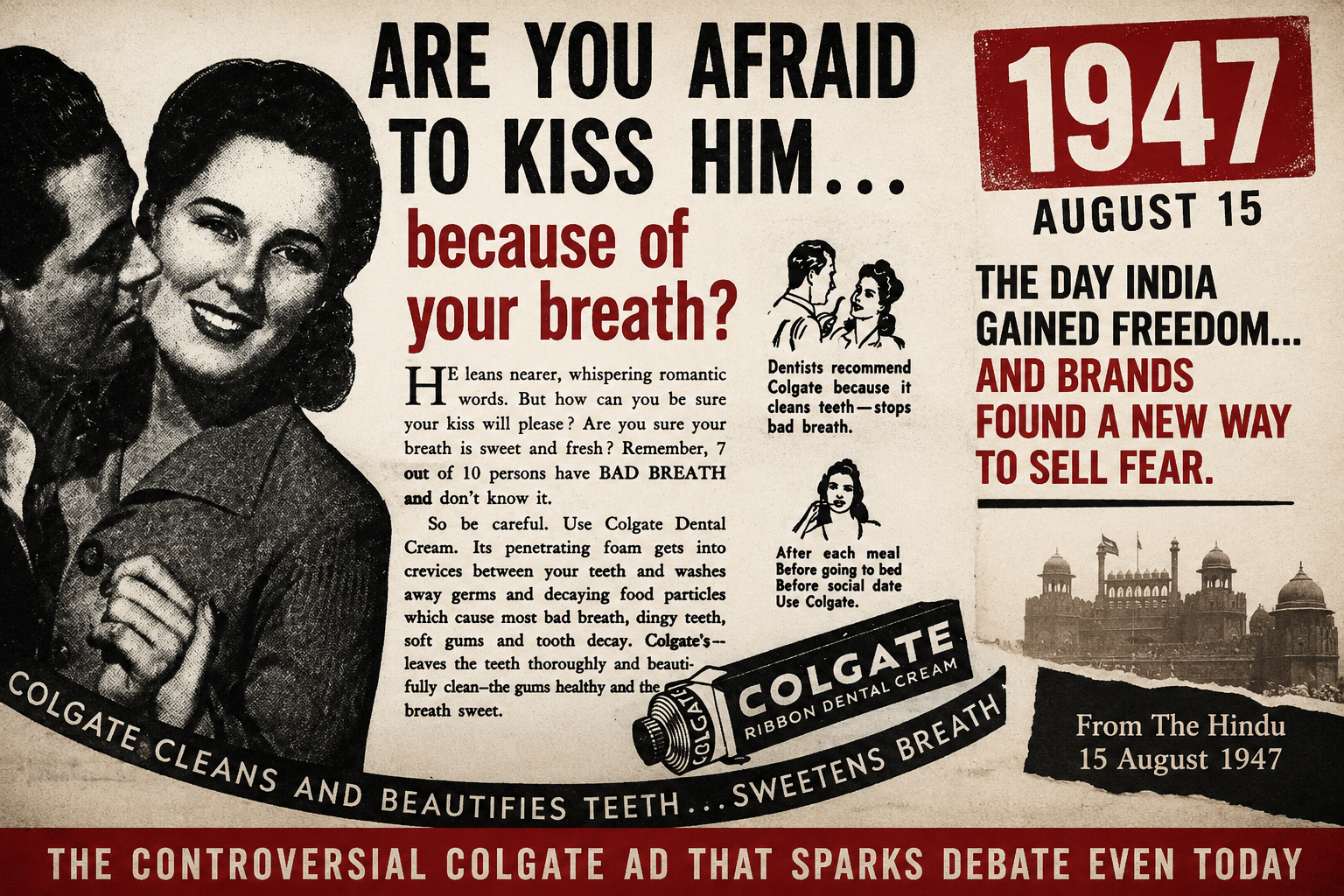
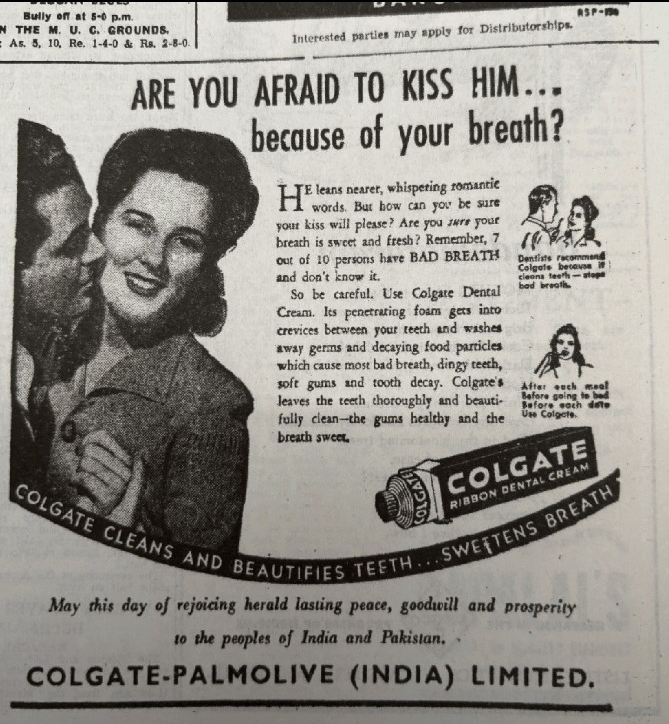
Published in The Hindu on August 15, 1947 – the very day India became independent – this Colgate advertisement may be one of the most psychologically manipulative ads ever printed in Indian media archives.
The headline screamed:
“ARE YOU AFRAID TO KISS HIM… because of your breath?”
Not freedom. Not nation-building. Not partition. Not the bloodshed unfolding across borders.
A toothpaste company chose the birth of a nation to sell insecurity.
And somehow, it worked.
Selling Anxiety in the Middle of History
The ad appeared on the same historic day India was celebrating independence from British colonial rule. Yet, while millions were thinking about identity, survival, migration and freedom, this advertisement focused on a woman’s fear of romantic rejection.
The copy reads almost like emotional blackmail:
“Are you sure your breath is sweet and fresh? Remember, 7 out of 10 persons have BAD BREATH and don’t know it.”
That single line is classic fear marketing — create a hidden problem, make the reader paranoid, then present the product as salvation.
Modern advertising still uses the same formula:
You smell bad.
Your skin is dark.
You are not fair enough.
You are aging.
You are undesirable.
Buy this product to become worthy.
This wasn’t just toothpaste marketing. It was the commercialization of insecurity.
Women as the Target, Men as the Reward
The ad specifically weaponized female anxiety.
The underlying message was clear: A woman’s desirability depends on how pleasant she is to men.
Notice the phrasing:
“Will your kiss please?”
“Are you afraid?”
“Kiss him…”
The woman is portrayed as someone constantly seeking male approval. The man’s satisfaction becomes the benchmark for her confidence.
This was not uncommon in mid-century advertising. Across the world, brands built campaigns around domestic pressure and romantic fear:
“Keep your husband happy.”
“Don’t lose your man.”
“Be marriage-ready.”
“Stay feminine.”
The disturbing part is how normalized it became.
Independence Day Irony
Perhaps the most controversial detail lies at the bottom of the advertisement.
It says:
“May this day of rejoicing herald lasting peace, goodwill and prosperity to the peoples of India and Pakistan.”
At first glance, it sounds patriotic. Almost compassionate.
But read it again carefully.
A multinational corporation inserted itself into the emotional moment of Partition and Independence — blending national sentiment with consumer branding.
The message subtly says: As India enters a new era, Colgate will be part of your life too.
This is corporate opportunism at its finest: attach your brand to a historic emotional event and become culturally permanent.
Today we call it:
emotional branding,
moment marketing,
nationalism advertising,
corporate storytelling.
In 1947, Colgate was already mastering it.
Colonial Beauty Standards Never Really Left
This ad also reflects something deeper about post-colonial India.
Even after political independence, consumer psychology remained heavily influenced by Western advertising frameworks:
shame-based selling,
appearance obsession,
desirability politics,
gender conditioning.
British rule may have ended in 1947. But the colonial mindset of “not being enough” survived beautifully inside advertising.
The irony is painful: India gained freedom, while consumers inherited new insecurities.
The Birth of Emotional Manipulation Marketing
Long before social media algorithms and influencer culture, brands understood one thing:
Fear converts.
This Colgate advertisement is an early blueprint for modern digital marketing psychology:
Create insecurity.
Amplify social fear.
Offer a solution.
Tie confidence to consumption.
Instagram beauty filters do it. Dating apps do it. Luxury brands do it. Wellness industries do it.
This 1947 ad was simply the analog version of today’s algorithmic anxiety economy.
Would This Advertisement Survive Today?
Probably not without backlash.
In today’s world, this advertisement would likely be criticized for:
sexism,
emotional manipulation,
body-shaming,
fear-based marketing,
reinforcing gender stereotypes.
Yet ironically, modern advertising still uses the same emotional triggers — just with more polished language and influencer aesthetics.
The methods evolved. The psychology did not.
Final Thought
This isn’t just a vintage toothpaste ad.
It is a historical document showing how corporations learned to shape emotions, gender roles and self-worth during one of the most important moments in Indian history.
India became politically independent on August 15, 1947.
But advertisements like this remind us that consumer culture quickly found new ways to control the mind.
And perhaps the most uncomfortable question is:
Have brands really changed since then – or have they simply become better at hiding the manipulation?