India’s AI Boom Is Creating Two Nations: The Builders and the Burnouts
India’s AI revolution is creating a massive divide between innovation and survival. As startups, investors, and tech giants race toward an AI-powered future, millions of gig workers face shrinking earnings, rising fuel costs, and algorithm-driven pressure. Explore how India’s booming digital economy is shaping two nations - the builders and the burnouts.
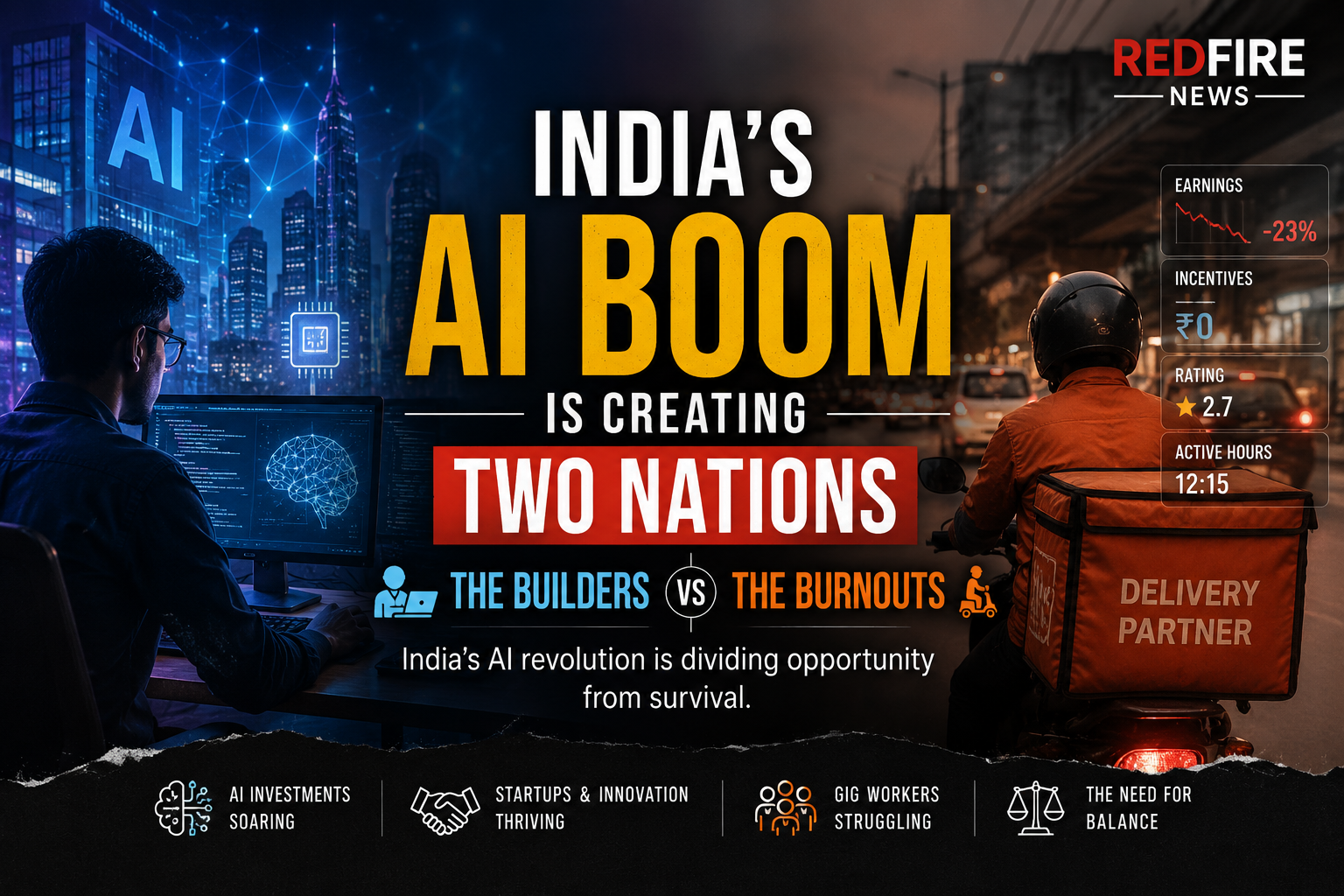
India is sprinting toward becoming an artificial intelligence superpower. But while billion-dollar AI investments, startup unicorns, and government-backed innovation missions dominate headlines, another India is quietly collapsing under the weight of the same digital economy.
One India is building the future. The other is delivering food to it.
From New Delhi’s AI summits to Bengaluru’s exhausted delivery riders, India’s technology revolution is exposing a growing divide between those who create algorithms and those controlled by them.
The New AI Gold Rush
India’s ambitions are no longer modest.
At the 2026 India AI Impact Summit, global tech giants, investors, and world leaders gathered in New Delhi as India positioned itself as the next major AI power. Prime Minister Narendra Modi declared that humans and AI would “co-create and co-work,” while industry leaders promised investments, infrastructure, and a new era of innovation.
Maharashtra alone is now targeting over ₹10,000 crore in AI investments and plans to create 1.5 lakh jobs by 2031 through dedicated AI policies, GPU infrastructure, and innovation cities.
Indian student founders are no longer chasing just edtech apps or food delivery clones. A new generation is building in AI, climate tech, defence systems, and quantum computing.
Even startups like Sarvam AI are pushing India toward sovereign AI models built specifically for Indian languages and local deployment.
The message is clear: India does not want to merely consume AI. It wants to lead it.
But Who Pays the Price?
While India celebrates AI-powered growth, gig workers across the country are sounding the alarm.
Fuel prices are rising. Incentives are shrinking. Working hours are expanding.
App-based workers in Bengaluru, Patna, and multiple Indian cities have already protested against declining payouts and unbearable operational costs. Several unions recently called for nationwide shutdowns demanding fair compensation and fuel-linked incentives.
These workers are not employees. They are “partners” on paper – but controlled by invisible algorithms that decide earnings, routes, ratings, and survival.
A missed delivery can reduce visibility. A bad rating can slash incentives. A machine decides who works and who disappears.
India’s digital economy depends on millions of workers who have no health insurance, no pension, no job security, and often no voice.
The Dangerous Illusion of Progress
India’s tech optimism is real – but so is its inequality.
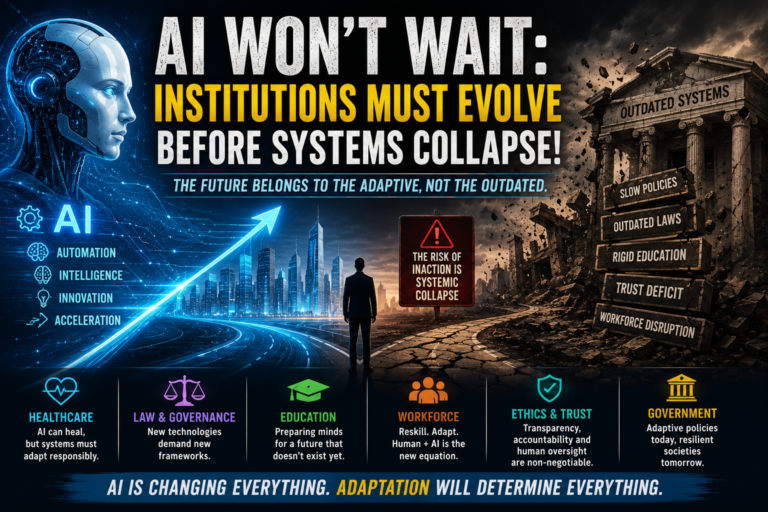
AI promises productivity, automation, and economic acceleration. Yet history shows that technological revolutions often reward capital faster than labour.
Today’s AI economy risks creating a society where:
coders earn in dollars,
founders raise millions,
investors celebrate disruption,
while workers at the bottom absorb the pressure.
The irony is impossible to ignore.
The same platforms promoting “future technology” are increasingly criticised for treating human labour as disposable infrastructure.
India’s Biggest Challenge Isn’t AI – It’s Balance
India absolutely should invest in AI.
It should build sovereign models. It should compete with Silicon Valley and China. It should lead the Global South in ethical technology.
But if the country fails to protect workers while scaling innovation, the AI revolution may deepen social fractures instead of solving them.
The future cannot belong only to engineers and investors.
Because a nation powered by apps still runs on human beings.
And no algorithm should ever be more valuable than the people feeding it.