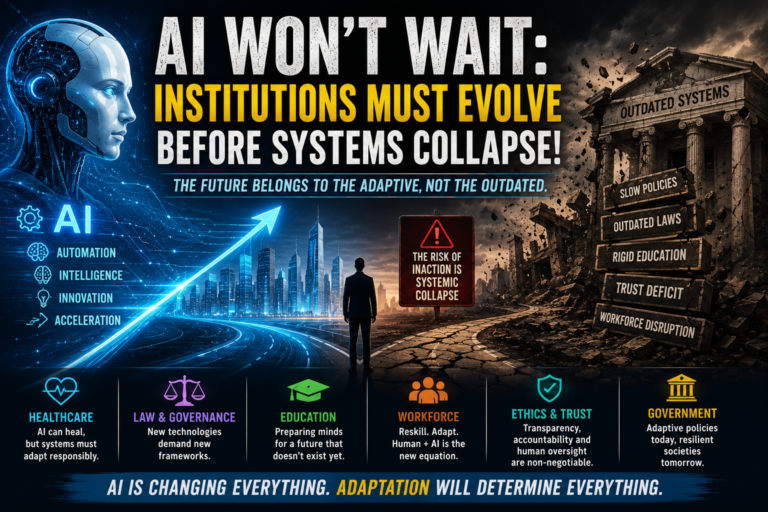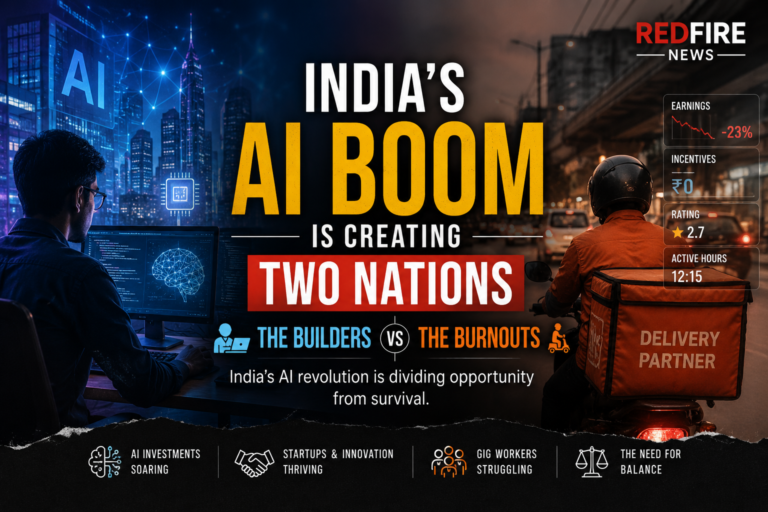
AI Innovations Unveiled: What You Should Know About the Latest Tech
Build Your Website in Minutes with One-Click Import – No Coding Hassle!

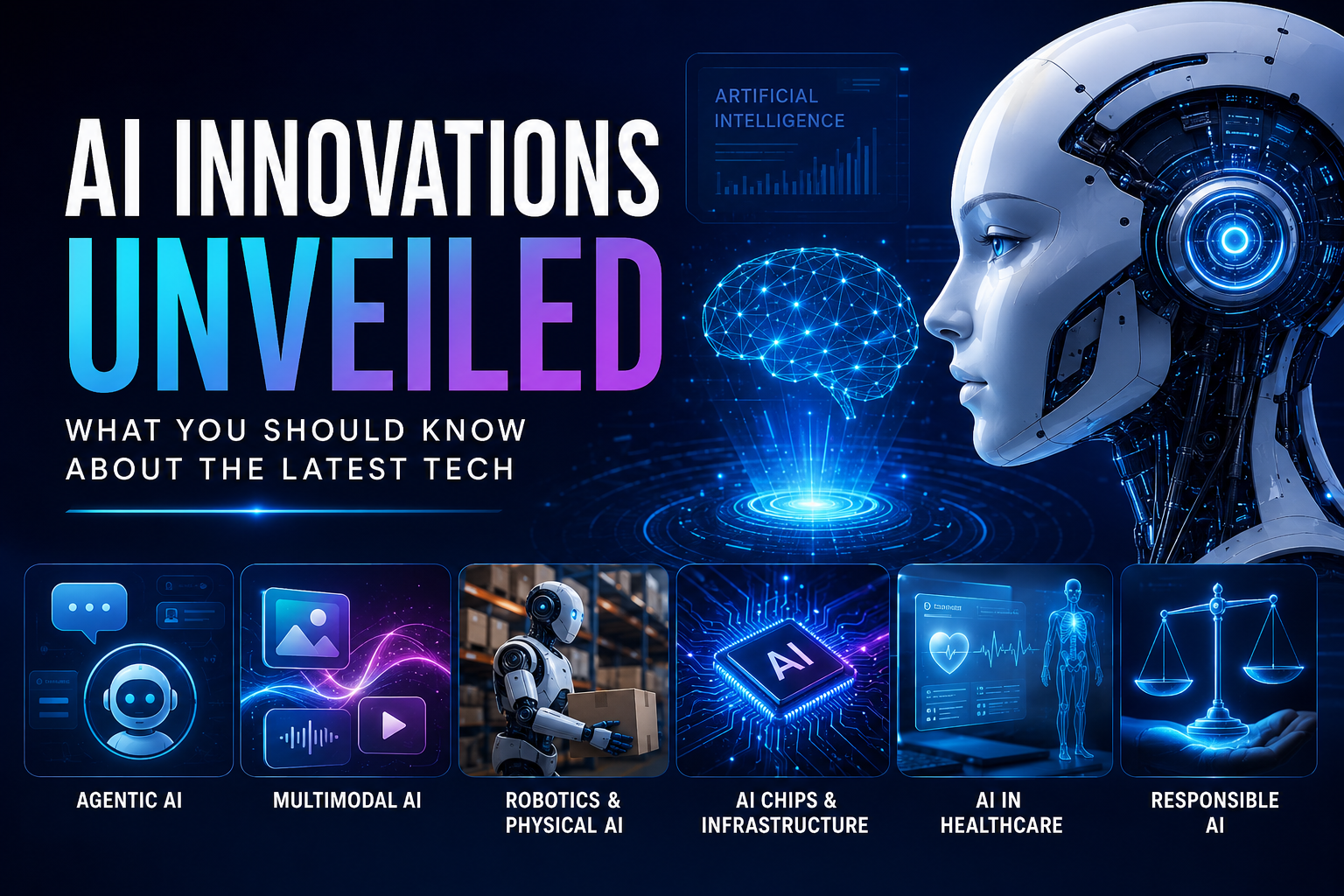
Artificial Intelligence is no longer a futuristic concept – it is rapidly becoming the backbone of how businesses operate, how people communicate, and how industries innovate. From autonomous AI agents to multimodal systems that can understand text, images, audio, and video simultaneously, 2026 is shaping up to be one of the most transformative years in tech history.
The AI revolution is moving beyond chatbots and content generation. Today’s innovations are creating intelligent ecosystems capable of reasoning, automating complex workflows, powering robotics, and even reshaping healthcare and manufacturing.
One of the biggest trends dominating the AI landscape is the emergence of “Agentic AI.” Unlike traditional AI systems that simply respond to prompts, agentic AI can independently plan, reason, and execute multi-step tasks with minimal human intervention.
Tech giants are heavily investing in this space. At Google I/O 2026, Google introduced its “Agentic Gemini Era,” where AI systems are integrated deeply into Search, Workspace, Android, and productivity tools.
This means AI assistants are evolving from passive tools into proactive digital collaborators capable of:
Businesses are increasingly adopting AI agents to reduce operational costs while improving productivity and efficiency.
Another major breakthrough is the rise of multimodal AI systems. These advanced models can process and generate multiple forms of data simultaneously – including text, speech, images, and video.
This innovation is making digital interactions feel more natural and intuitive. Instead of typing commands, users can now:
Google’s Gemini Omni and other multimodal platforms are leading this shift toward immersive AI-powered experiences.
For creators, businesses, educators, and marketers, this opens massive opportunities in:
AI is no longer confined to screens. The next wave of innovation is “Physical AI” – intelligent systems embedded into robots and real-world machines.
Modern robots are becoming smarter through machine learning and real-time environmental understanding. Experts predict that AI-powered robots will soon assist with:
Companies are already developing robots capable of performing household chores, assembling products autonomously, and even assisting in surgical procedures.
This marks the beginning of a future where AI systems interact seamlessly with the physical world.
Behind every AI breakthrough lies massive computational power. As demand for AI grows, companies are racing to build faster and more efficient AI hardware.
Alibaba recently unveiled its Zhenwu M890 AI chip designed specifically for advanced AI agent workloads.
Meanwhile, Dell introduced “Deskside Agentic AI,” enabling enterprises to build secure local AI environments without relying entirely on cloud infrastructure.
This infrastructure battle is critical because future AI systems require:
The AI hardware market is quickly becoming as competitive as the software race itself.
Healthcare is one of the industries benefiting the most from AI innovation. Machine learning and robotics are enhancing diagnostics, predictive care, and medical imaging.
AI-enabled medical systems can now:
Wearable devices powered by AI are also becoming increasingly common, helping individuals monitor health conditions in real time.
The integration of AI into healthcare is expected to improve accessibility, reduce medical errors, and accelerate innovation in patient care globally.
While AI innovation is accelerating rapidly, concerns around ethics, safety, transparency, and governance are also growing. Experts warn that responsible deployment will determine whether AI becomes a force for empowerment or disruption.
Key concerns include:
Governments and organizations worldwide are now focusing on creating frameworks for safe and ethical AI development.
AI is no longer optional – it is becoming foundational. Companies that embrace AI strategically will likely gain significant advantages in productivity, innovation, and customer experience.
At the same time, individuals will need to adapt to an AI-driven economy where creativity, adaptability, and human-centered skills become increasingly valuable.
The future of AI is not just about automation. It’s about collaboration between humans and intelligent systems to solve complex global challenges faster than ever before.
The latest AI innovations are redefining industries at an unprecedented pace. From agentic AI and multimodal systems to robotics and precision healthcare, the world is entering a new technological era driven by intelligent machines.
As these technologies continue to evolve, staying informed and adaptable will be essential for businesses, professionals, and consumers alike.
One thing is certain: the AI revolution has only just begun.