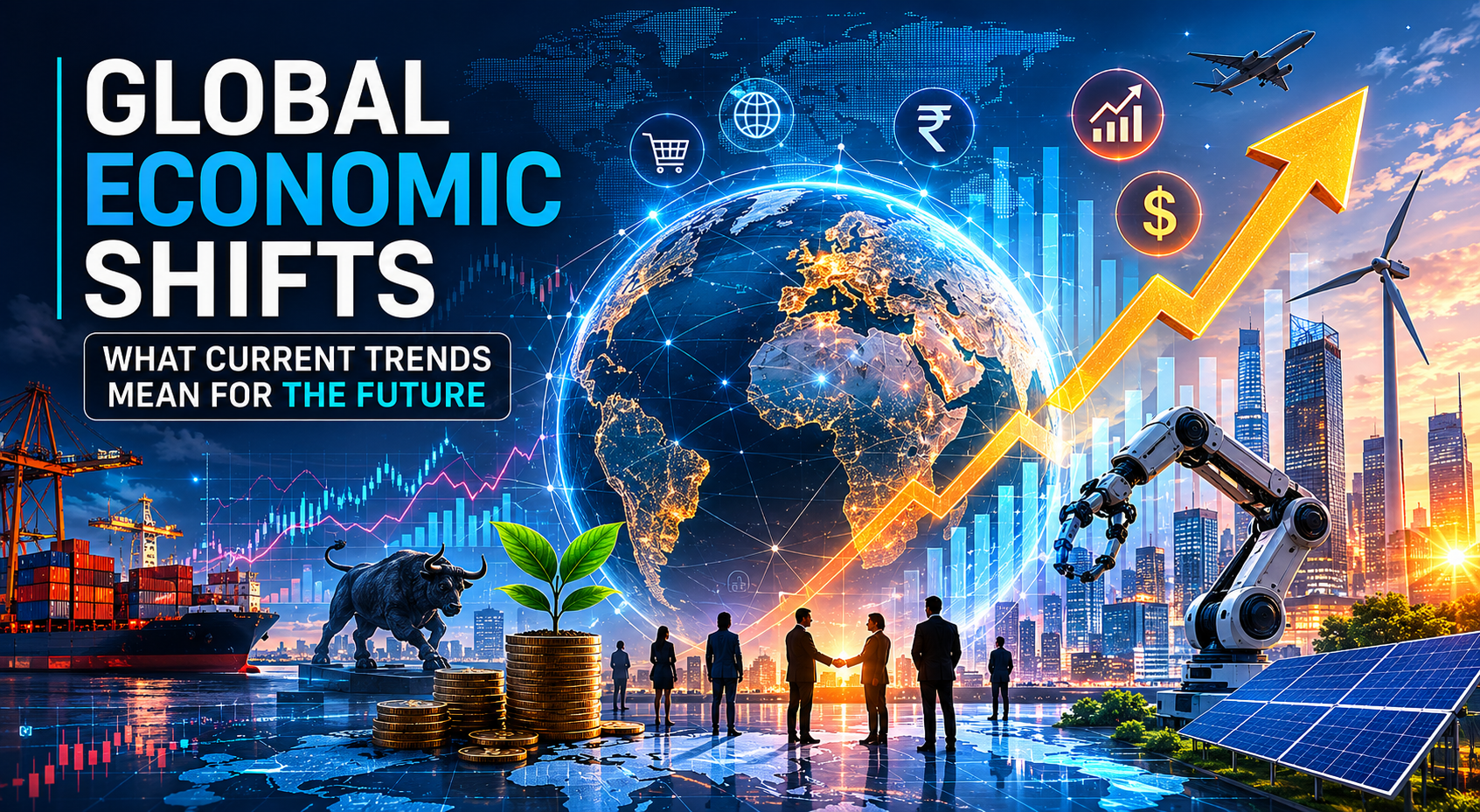
Global Economic Shifts: What Current Trends Mean for the Future
The global economy is undergoing a major transformation driven by inflation, artificial intelligence, renewable energy, shifting trade alliances, and evolving workforce trends. As nations adapt to rapid technological and geopolitical changes, experts believe the future economy will be shaped by innovation, sustainability, resilience, and the ability to navigate an increasingly interconnected yet uncertain world.
The global economy is entering a period of major transformation. From inflation and technological disruption to changing trade alliances and climate-driven investments, nations across the world are adapting to a rapidly evolving financial landscape.
Economic experts believe the coming decade could redefine how countries produce, trade, consume, and compete on a global scale.
What was once considered a stable economic model is now being reshaped by uncertainty, innovation, and geopolitical change.
A Changing Global Economy
For decades, globalization fueled economic growth through international trade, outsourced manufacturing, and interconnected markets. However, recent events such as the COVID-19 pandemic, supply chain disruptions, wars, inflation, and energy crises exposed the vulnerabilities of this highly dependent system.
Countries are now prioritizing:
Domestic manufacturing
Economic resilience
Technological independence
Energy security
Strategic trade partnerships
This shift is slowly transforming the balance of economic power worldwide.
Inflation and Rising Living Costs
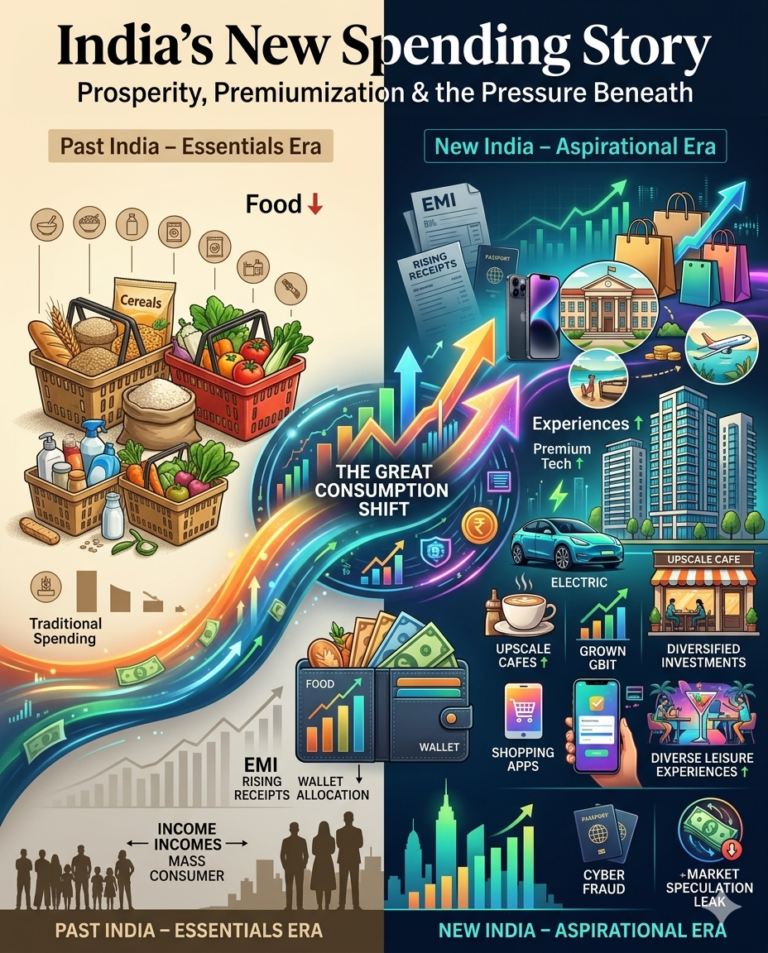
One of the biggest concerns affecting economies globally is inflation. The rising cost of fuel, food, housing, transportation, and healthcare has placed financial pressure on households across both developed and developing nations.
To control inflation, central banks have increased interest rates, making borrowing more expensive for businesses and consumers.
This has resulted in:
Slower economic growth
Reduced consumer spending
Expensive loans and EMIs
Pressure on small businesses
Increased unemployment risks
For many middle-class families, the cost-of-living crisis has become one of the defining economic realities of recent years.
Artificial Intelligence Is Transforming Industries
Artificial Intelligence is rapidly becoming one of the most powerful economic forces in the modern world.
AI technologies are reshaping industries by automating processes, improving efficiency, and creating entirely new business models.
Major sectors experiencing AI-driven transformation include:
Finance
Healthcare
Manufacturing
Media
Retail
Customer support
Logistics
Businesses are increasingly investing in AI tools to reduce costs and increase productivity. However, economists also warn that automation may replace certain traditional jobs, creating both opportunities and challenges for the global workforce.
The countries that lead in AI innovation could dominate the next era of economic growth.
India and Emerging Economies Gain Momentum
Emerging markets such as India, Vietnam, Indonesia, Brazil, and several African nations are becoming increasingly important in global economic discussions.
India, in particular, is witnessing rapid growth through:
Startup ecosystems
Digital payments
Infrastructure development
Manufacturing initiatives
Renewable energy investments
Technology expansion
With a young population and growing internet penetration, India is positioning itself as a major economic powerhouse for the future.
At the same time, challenges such as unemployment, inflation, income inequality, and urban pressure continue to require urgent attention.
Global Supply Chains Are Evolving
Supply chain disruptions during the pandemic forced companies to rethink overdependence on single manufacturing hubs.
As a result, businesses are diversifying operations across multiple countries to reduce risk and improve resilience.
This trend has accelerated:
Regional manufacturing
“China Plus One” strategies
Automation and robotics
Logistics innovation
New trade partnerships
Companies are now prioritizing reliability and flexibility over simply choosing the lowest-cost production model.
Renewable Energy Is Becoming an Economic Priority
Climate change is influencing economic policies more than ever before.
Countries are investing heavily in:
Solar energy
Electric vehicles
Wind energy
Green hydrogen
Battery technology
Sustainable infrastructure
The transition toward clean energy is creating new industries and employment opportunities while reducing long-term dependence on fossil fuels.
Nations leading the green economy transition may gain significant geopolitical and economic influence in the coming decades.
Geopolitical Tensions Continue to Impact Markets
Global conflicts and political tensions are affecting oil prices, trade routes, investment flows, and currency stability.
Economic competition between major global powers is increasingly focused on:
Semiconductor manufacturing
Technology control
Artificial Intelligence
Energy access
Military spending
Digital infrastructure
Analysts believe the global economy may become more regionally divided as countries strengthen strategic alliances and reduce external dependencies.
The Future of Work Is Rapidly Changing
Work culture is also undergoing a major transformation.
Remote work, freelancing, gig platforms, creator economies, and digital entrepreneurship are becoming more mainstream worldwide.
Younger generations are increasingly seeking:
Flexible work environments
Multiple income streams
Digital-first careers
Work-life balance
Skill-based opportunities
Meanwhile, automation and AI are expected to increase demand for skills related to technology, creativity, leadership, and problem-solving.
Educational systems worldwide may need major reforms to prepare future generations for these changing economic realities.
Economic Inequality Remains a Major Concern
While innovation and globalization have created immense wealth, inequality continues to widen in many regions.
Experts warn that without inclusive economic policies:
Wealth gaps may increase
Social unrest could rise
Youth unemployment may worsen
Access to quality healthcare and education may decline
Many economists argue that sustainable economic growth must include social stability, equal opportunity, and long-term environmental responsibility.
Perispective
The current economic shifts are not temporary disruptions — they are signals of a deeper global transformation.
The future economy may be defined less by traditional industrial power and more by:
Technological adaptability
Data control
Innovation ecosystems
Sustainability
Human capital
As automation, AI, climate challenges, and geopolitical realignments reshape the global landscape, nations that invest in people, innovation, and resilience may emerge as the true leaders of the next economic era.
The biggest challenge for governments and businesses will be balancing growth with stability, inclusion, and long-term sustainability.
Because in the years ahead, economic success may no longer depend only on wealth – but on how effectively societies adapt to rapid change.
Honorary Advisor – BRICS CCI Assistant Comissioner – EERA, Provisional World Parliament Founder – RedFire Creations, Golden Women, Goldgeist Women Confederation Certified in Strategic Leadership Management from London School of Business Administration Title Winner – Ms World India 2020, Ms India International 2019, Ms Hyderabad 2018, Ms Fashion Icon, Ms Awesome