How Neeraj Kakkar Built Paper Boat by Selling Childhood Memories in a Bottle
Discover the inspiring success story of Neeraj Kakkar, founder of Paper Boat, who transformed childhood nostalgia into a successful beverage brand with iconic Indian flavors, innovative packaging, and rapid growth that attracted Tata’s interest.
And then there are rare brands that sell emotions.
Paper Boat did something magical-it sold memories.
A sip of Aam Panna reminded people of summer vacations at their grandparents’ house.
A taste of Jaljeera brought back childhood evenings after school.
Suddenly, traditional Indian drinks that had quietly disappeared from urban lifestyles found a modern comeback.
And behind this emotional revolution stood one visionary entrepreneur:
Neeraj Kakkar
A man who dared to believe that nostalgia could become a billion-rupee business.
At a time when multinational beverage giants dominated shelves with colas and synthetic drinks, Neeraj Kakkar built a brand rooted in Indian identity.
He didn’t compete through glamour.
He competed through emotion.
And that strategy transformed Paper Boat into one of India’s most loved beverage brands—so successful that even Tata reportedly showed interest in acquiring it.
But the real story is far more inspiring than numbers.
This is the journey of creativity, patience, cultural understanding, and entrepreneurial courage.
A Double MBA Graduate Who Could Have Played Safe
Neeraj Kakkar had the kind of profile many people dream of.
He was highly educated, ambitious, and globally exposed.
A double MBA graduate and a Palmer Scholar from Wharton, Kakkar had every opportunity to pursue a secure corporate career.
But entrepreneurs think differently.
Instead of following predictable paths, they ask uncomfortable questions.
For Kakkar, the question was simple:
“Why are Indian beverage shelves dominated by foreign tastes when our own childhood drinks are disappearing?”
That question eventually changed the beverage industry.
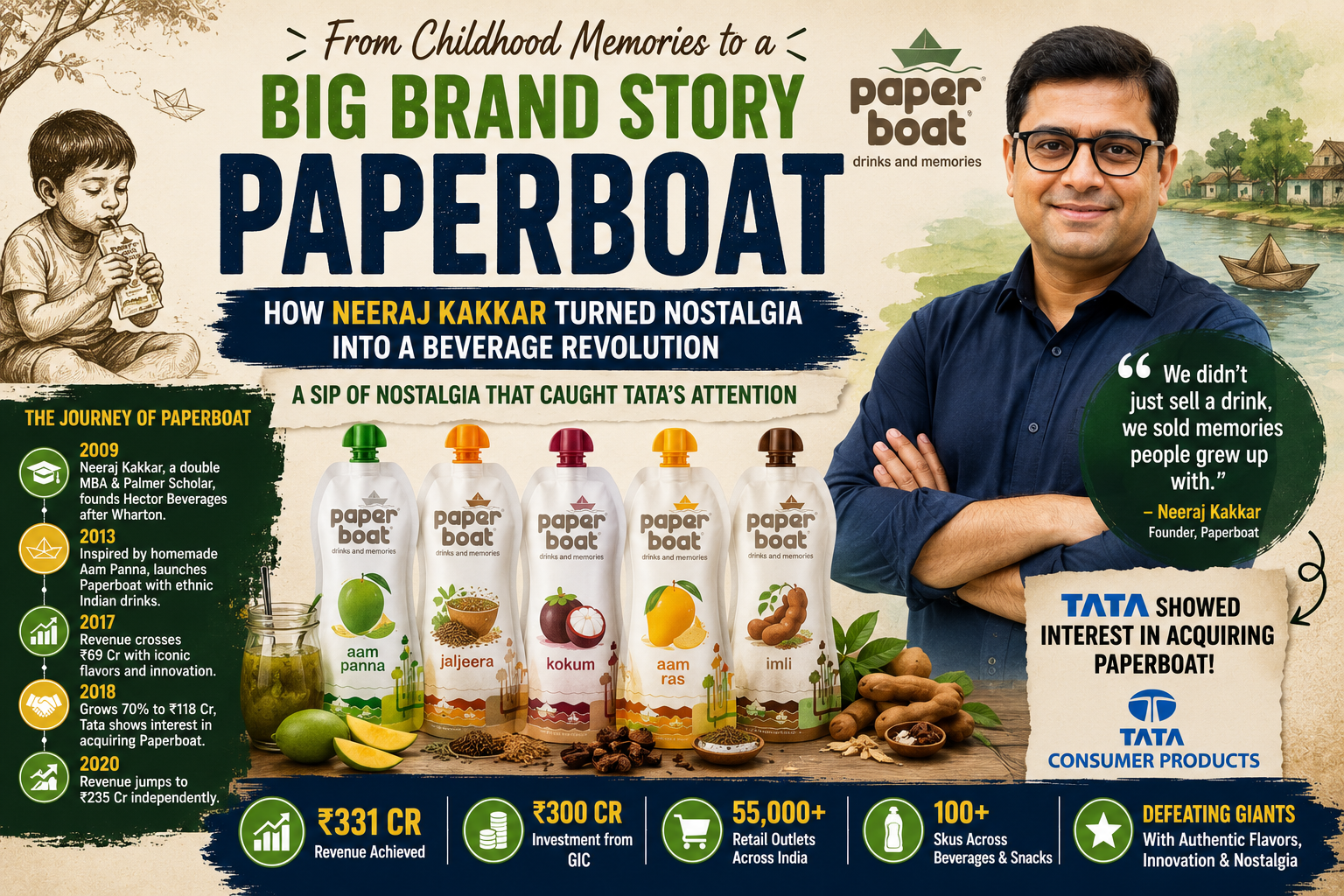
In 2009, after completing his global education and gaining experience, Kakkar founded Hector Beverages.
Initially, the company experimented with categories like energy drinks and protein beverages.
But the breakthrough idea had not arrived yet.
That came from memory.
When Childhood Became a Business Idea
Sometimes, the biggest business ideas are hiding in ordinary moments.
For Kakkar, inspiration came from something deeply personal:
Homemade Aam Panna.
Like many Indians, he carried emotional memories of drinks lovingly prepared at home.
But modern retail stores offered almost nothing similar.
Consumers had two options:
Sugary soft drinks
Artificial packaged juices
Traditional Indian beverages were largely missing.
And yet, people emotionally connected with them.
This gap became an opportunity.
Kakkar realized something powerful:
People don’t only buy taste-they buy memories.
That insight became the birth of Paper Boat.
The Birth of Paper Boat in 2013
In 2013, Paper Boat officially launched.
Unlike traditional beverage startups trying to imitate Western products, Paper Boat celebrated Indian culture.
Its mission was beautifully simple:
Bring forgotten Indian drinks back to life.
Instead of cola or flashy fruit juices, Paper Boat launched:
Aam Panna
Jaljeera
Kokum
Aam Ras
Chikki-inspired drinks
Regional Indian flavors
The brand immediately stood out.
Why?
Because nobody else was doing it.
Paper Boat wasn’t competing in the same game.
It created a new category.
Step-by-Step Journey: How Neeraj Kakkar Built Paper Boat
Experimenting Before Finding the Winning Formula
Before Paper Boat became successful, Hector Beverages experimented with energy drinks and proteins.
The initial products worked moderately well but lacked emotional connection.
Kakkar understood something important:
Products succeed when people emotionally connect with them.
That realization pushed him toward nostalgia-driven beverages.
Building Around Emotion, Not Just Taste
Most beverage companies sold refreshment.
Paper Boat sold memories.
Every part of the brand reflected nostalgia:
Storytelling packaging
Childhood-inspired branding
Traditional recipes
Emotional advertisements
Even the name “Paper Boat” symbolized innocence and childhood.
The brand instantly felt familiar.
Warm.
Comforting.
Choosing Indian Flavors Others Ignored
This was perhaps Kakkar’s boldest decision.
Instead of copying global beverage trends, he invested in forgotten Indian drinks.
Many people initially doubted the strategy.
Questions surfaced:
“Will urban consumers buy Jaljeera?”
“Can Aam Panna scale commercially?”
Kakkar believed they would.
And he was right.
The demand exploded.
Especially for:
Aam Panna and Jaljeera
These nostalgic flavors became instant hits.
Demand grew so rapidly that Paper Boat had to expand manufacturing capacity.
Packaging Innovation That Made a Difference
One of Paper Boat’s smartest moves was packaging.
Instead of traditional bottles or cans, the company introduced soft, curved pouches with conical caps.
The packaging looked playful and premium at the same time.
More importantly:
It stood out on shelves.
Paper Boat even patented its iconic cap design, helping the brand remain visually unique.
Sometimes branding is not just marketing.
Sometimes packaging becomes identity.
Paper Boat mastered this beautifully.
Strong Backing and Smart Funding
Great ideas need capital.
As Paper Boat gained momentum, major investors started noticing.
The company attracted funding support from notable investors, including backing associated with Narayan Murthy’s Catamaran Ventures.
Paper Boat secured nearly ₹182 crore in funding, helping the company:
Expand operations
Improve production
Strengthen supply chains
Increase market reach
The company expanded its Mysuru manufacturing facility, preparing for future demand.
This funding gave Paper Boat scale.
But growth still depended on execution.
Making Premium Feel Affordable
Many premium beverage startups fail because they overprice products.
Kakkar avoided this mistake.
Paper Boat carefully balanced:
Premium branding + affordable pricing
The products looked premium but remained accessible.
Retail-friendly pricing helped penetration across stores.
Consumers felt they were getting something special—without paying luxury prices.
That balance proved crucial.
The Revenue Explosion
By 2017, Paper Boat’s revenue climbed to nearly ₹69 crore.
This growth came from:
Product innovation
New flavor launches
Better retail distribution
Strong emotional branding
But the momentum didn’t stop.
By 2018, Paper Boat reportedly grew nearly 70%, reaching around ₹118 crore in revenue.
The company was no longer an experiment.
It had become a serious player.
And suddenly, bigger eyes started watching.
When Tata Became Interested
Paper Boat’s remarkable growth caught attention across India’s corporate ecosystem.
Reports suggested that Tata Consumer Products explored interest in acquiring the company.
For any startup founder, this represents validation.
Why?
Because large corporations rarely chase brands unless they see real long-term potential.
Although the acquisition never materialized, the interest itself proved something important:
Paper Boat had become too important to ignore.
A brand built around nostalgia had entered serious business territory.
Growing Independently: The Bigger Victory
Many startups celebrate acquisition.
Paper Boat did something even harder.
It kept growing independently.
By 2020, the company reportedly crossed approximately ₹235 crore in revenue, proving it could scale without losing identity.
The momentum continued.
Paper Boat expanded into:
Snacks
Health beverages
Coconut water
New regional drink categories
The company diversified while staying emotionally authentic.
That balance is incredibly difficult.
Yet Kakkar managed it.
How Paper Boat Defeated Beverage Giants Without Fighting Them Directly
Here’s the fascinating part.
Paper Boat never tried to beat Coca-Cola or Pepsi at their own game.
Instead, it changed the rules.
While giants sold fizzy drinks, Paper Boat sold:
Culture. Memory. Familiarity. Emotion.
This differentiation made competition irrelevant.
Consumers didn’t compare Paper Boat with cola.
They experienced it differently.
That strategic positioning protected the brand.
The Secret Behind Paper Boat’s Success
Several brilliant strategies powered the company’s rise.
1. Emotional Branding
Paper Boat sold nostalgia, not just beverages.
2. Category Creation
Instead of competing directly, it created an entirely new niche.
3. Packaging Innovation
Its patented conical cap became instantly recognizable.
4. Cultural Authenticity
Indian flavors felt genuine—not manufactured.
5. Affordable Premium Positioning
High-quality experience at accessible pricing.
6. Storytelling Marketing
Paper Boat’s campaigns focused on childhood memories, family, and emotions.
This made the brand unforgettable.
From 55,000 Retail Outlets to National Recognition
As the brand expanded, Paper Boat products entered over 55,000 outlets across India.
For a company selling ethnic drinks, this was remarkable.
Paper Boat had achieved what many thought impossible:
It made traditional Indian beverages cool again.
Young consumers embraced them.
Urban audiences rediscovered forgotten tastes.
And older generations smiled with nostalgia.
Very few brands bridge generations successfully.
Paper Boat did.
What Entrepreneurs Can Learn from Neeraj Kakkar
The Paper Boat Success Story offers timeless lessons.
1. Build Around Emotion
People remember how products make them feel.
2. Don’t Copy Giants
Create your own category instead.
3. Culture is a Competitive Advantage
Local understanding can beat global templates.
4. Packaging Matters
Good products fail if nobody notices them.
5. Patience Wins
Paper Boat didn’t explode overnight.
It grew steadily through consistency.
6. Authenticity Scales
Consumers trust brands that feel genuine.
Final Thoughts
Neeraj Kakkar didn’t just launch a beverage company.
He revived memories.
He brought India’s forgotten flavors back into modern life.
He proved entrepreneurship isn’t only about technology or disruption.
Sometimes, success comes from preserving what people quietly miss.
Paper Boat became more than a drink.
It became a feeling.
And perhaps that’s why even powerful companies like Tata saw potential in it.
Because in business-
Products can be copied, but emotions are impossible to duplicate.
That is the real genius behind Paper Boat’s success.
AI Conversationalist, Global Marketer, TEDx Speaker, Member-Board Of Studies-CDSW, AI Governance, Mentor Onboarded CCMB-Atal Incubation Center, Entrepreneurship Coach